
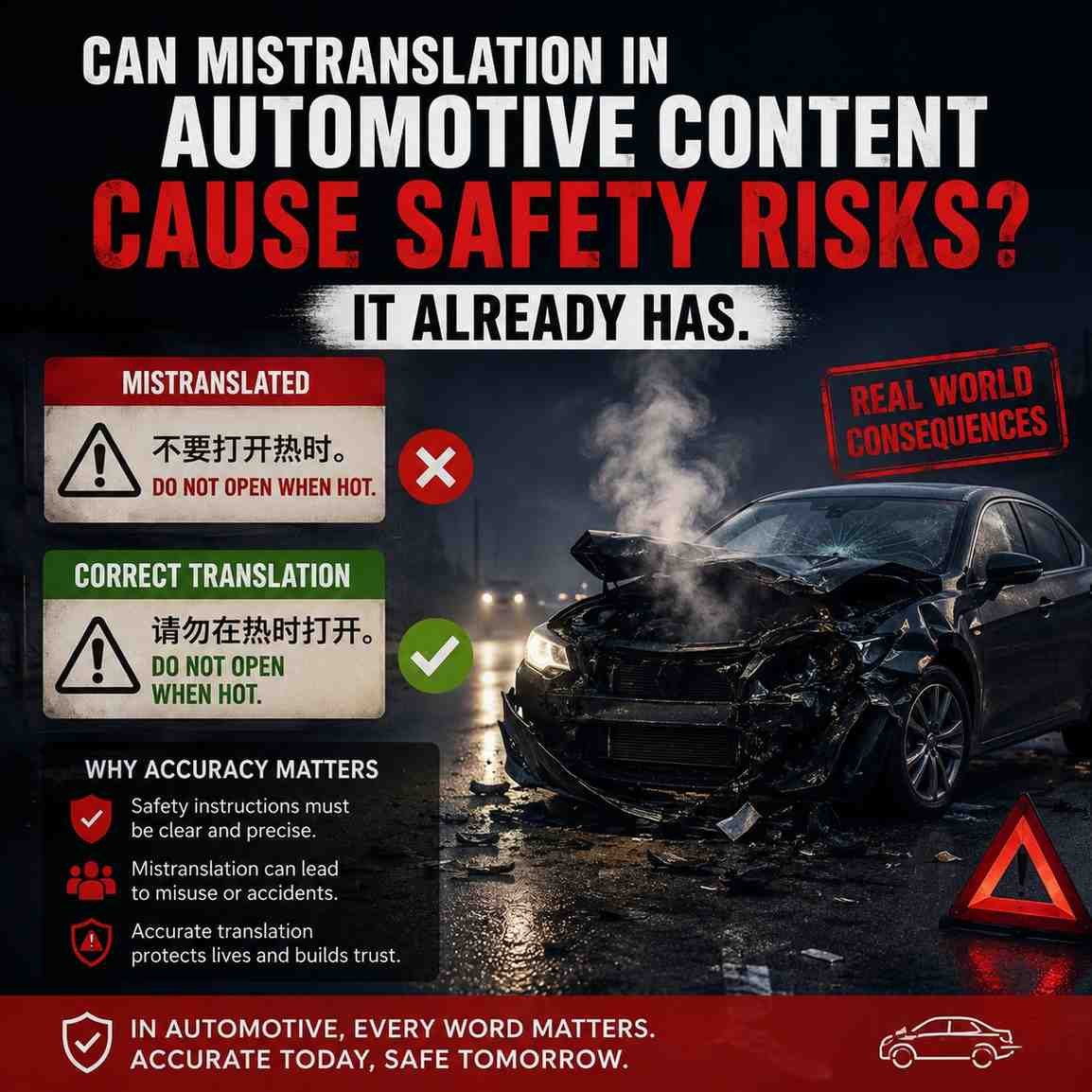

The 33-year-old, Luo Zhen from Beijing, learned the hard way that translation is not just a language task. It is also responsible for guaranteeing safety. In 2016, Zhen’s brand-new car crashed into a vehicle parked off the side of the road. Although this accident was quite minor and caused no injuries, the root cause was quite alarming. The entire incident was not a lapse of attention but a language mix-up.
Why Did the Beijing Car Crash Happen?
The car crash occurred because marketing materials related to the car translated the English word “autopilot” into the Chinese phrase “zidong jiashi.” The issue was that the Chinese phrase literally meant self-driving and not autopilot. These two terms might sound similar, but they were evidently misleading for the user.
According to experts, the car was equipped with an Advanced Driver Assistance System (ADAS). This system requires drivers to keep their hands on the steering wheel at all times. Because the translated phrase lacked precision, Zhen assumed otherwise and took his hands off the wheel. The result? A crash that solely occurred due to mistranslation in automotive content.
Why Is Mistranslation in Automotive Content So Risky?
Translating automotive content requires a different approach than general content. When you translate a car manual, safety label, or digital software, you are handling text that directly impacts human lives. A small mistranslation can become a safety hazard in no time. The scope of mistranslation becomes even greater in modern vehicles that are packed with advanced software, digital displays, and complex parts.
Additionally, several vehicle governing bodies, including the National Highway Traffic Safety Administration (NHTSA), emphasize that cars must be recalled when they create safety risks or fail to meet minimum safety standards. Incidents like this affect both the safety of the user and the credibility of the car company.
Where Do Translation Errors Usually Happen?
Automotive content covers highly specific and technical materials, which increases the risk of mistranslations.
The following automotive content is prone to translation errors:
- Vague Torque Instruction
- Untranslated Warning Labels
- Inconsistent Part Names
- Incorrect Software Terms
- Inaccurate Safety Instructions
- Mistranslated Vehicle Specifications
- Format Errors in Technical Drawings
Key Mistakes to Avoid in Automotive and Technical Translation
Automobile companies must establish strict language rules to ensure compliance and public safety.
Here are some key mistakes to avoid in automotive translations:
- Working Without a Translation Glossary: A translation glossary is essential, especially for complicated processes like automotive translations. It lists complex terms, acronyms, and frequently occurring phrases to make translations easier. Imagine attempting Chinese website translation without knowing the high-ranking keywords. This approach would lead to inconsistent and inaccurate translations.
- Not Including Regional Dialects: Some languages, such as German, Chinese, and Portuguese, have different regional dialects. Hence, when an automotive company decides to use the general language instead of specific dialects, it risks confusion and safety issues. By localizing materials for specific regions, companies can ensure precise cultural context and adherence to technical standards in their content.
- Processing High-Volume Content Manually: Translating high-volume content manually can be tedious and prone to error. Reliable automotive translation services use advanced terminology management and computer-assisted translation (CAT) tools for efficient results. However, these results must be validated by qualified human linguists with deep industry knowledge.
Explore more about how to achieve successful translations of manufacturing content in our blog: Technical Translations: The Key to Efficient Manufacturing Success Globally.
Expert’s Guide to Avoid Mistranslation in Automotive Content
The following table will help you understand how experts avoid mistranslation in automotive content:
| What To Do | How to Do | What is the Result |
| Ensure Terminology Accuracy | Use client-approved glossaries, industry terms, and CAT tools like SDL Trados and memoQ. | Removes the scope of guesswork and ensures the usage of precise terms. |
| Implement Contextual Integrity | Work with native linguists and industry experts to ensure correct usage of phrases and words with multiple meanings. | Prevents errors like confusion between “assisted steering” and “autonomous driving.” |
| Multi-Step Quality Checks | Implement deep quality reviews using experts. This includes reviewing vocabulary, grammar, tone, structural formats, and regulatory compliance. | Ensures that all texts are accurately translated and appear consistent across different platforms. |
Partnering with a certified translation company can help achieve expert-level translations for multiple languages on a large scale.
Frequently Asked Questions (FAQs)
What is mistranslation in automotive content?
Ans. Mistranslation in automotive content refers to any stylistic error or terminology mismatch that occurs while translating vehicle documents, software interfaces, or safety labels from one language to another.
How do professional agencies avoid translation errors in technical manuals?
Ans. Expert teams avoid translation errors by building comprehensive translation glossaries. They integrate these glossaries into their translation workflow. Furthermore, they work with native, technically trained linguists and utilize CAT tools to derive accurate and high-quality results. Expert agencies that offer technical translations also implement strict quality reviews to ensure no mistranslated term goes unnoticed.
Securing Precision with Expert Automotive Translation Services
Automotive translations must not only be precise but also not leave any room for guesswork. Their aim is to be consistent and compliant, regardless of the target region.
Somya Translators, a certified translation company from India, helps global automotive brands navigate the strict requirements of technical translations. We are certified under ISO 17100:2015 and provide high-level expertise across several industries, including the automobile industry.
Whether you want your Chinese document translated accurately or are looking to translate safety manuals, we can help you with precision, compliance, and on-time delivery.